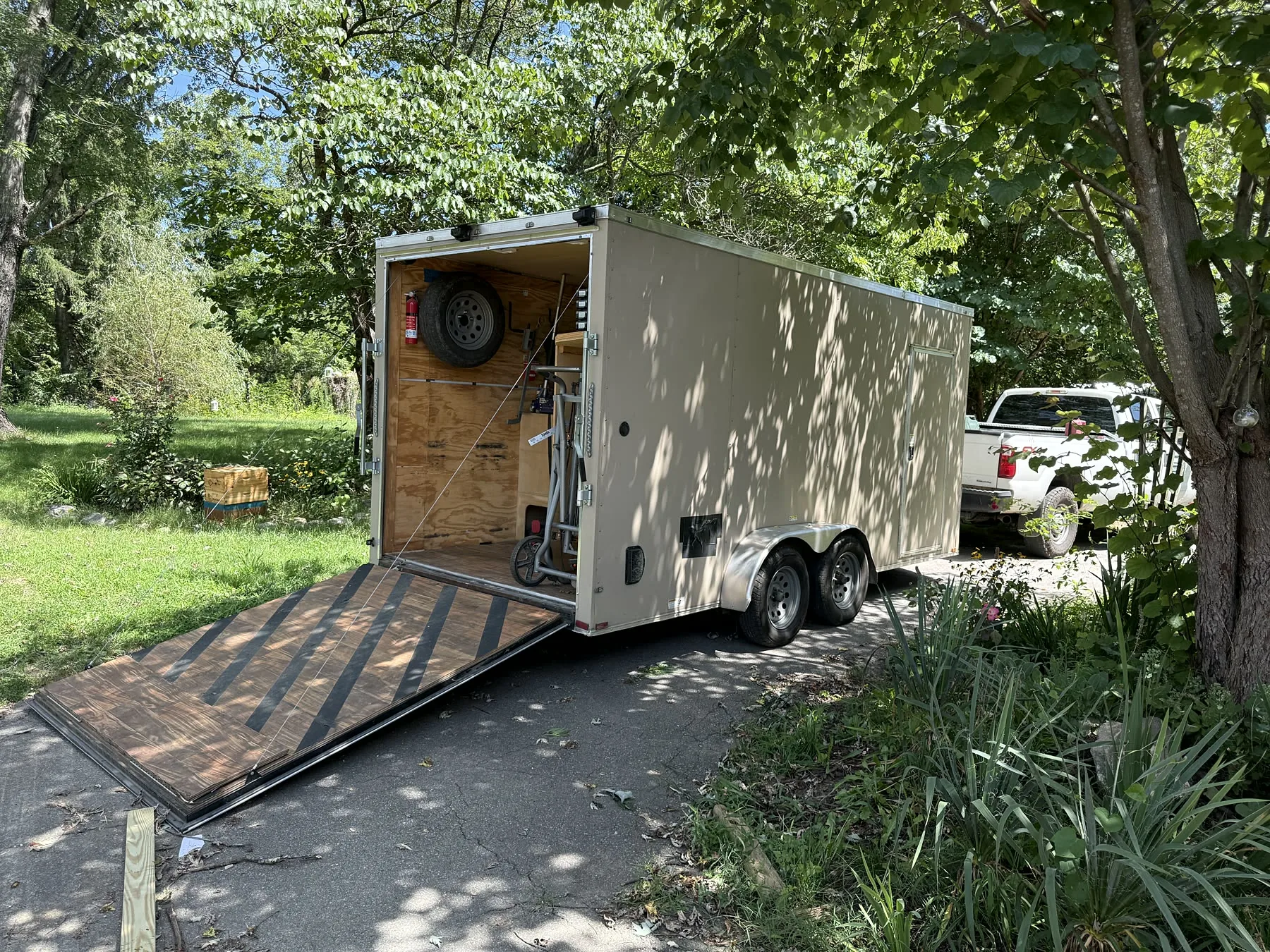
One complete 7×16 mobile shop · Built by builders
THE WHOLE SHOP.
WHEREVER THE WORK IS.
Biltout is a premium productivity product for serious contractors: a standardized mobile operating system designed to reduce searching, forgotten tools, extra trips and repeated setup—so owners can regain operational control.
01
Your time and money
Use your own crew numbers
See what wasted time may be costing you.
Enter the time your crew spends searching, loading, resetting and making store runs. We’ll turn those hours into dollars and compare that cost with the Biltout price.
BILTOUT TIME + COST ESTIMATORYour crew · your numbers
LIVE ESTIMATE Inputs stay in this browser
Biltout Time Savings Scale
See what lost time costs you.
Enter how your crew works today. See what setup, searching and supply runs may be costing—and how that cost compares with the $29,999.99 Biltout price.
Show savings forThe main numbers and chart update. The table still shows every period.
Cost of lost time nowBiltout price
Where the lost time comes fromYear
Setup + search friction420 hr$17,640
Avoidable store runs120 hr$5,040
Total cost of lost time540 hr$22,680
| Period | Crew-hours lost | Cost of lost time |
|---|---|---|
| Week | 11.3 hr | $473 |
| Avg. month | 45 hr | $1,890 |
| Year | 540 hr | $22,680 |
| 5 years | 2,700 hr | $113,400 |
Math & important details
- Setup + search hours
- crew × minutes ÷ 60 × workdays
- Store-run hours
- runs × trip minutes ÷ 60 × people leaving
- Cost of lost time
- (setup + search hours + store-run hours) × hourly crew cost
- Time to cover price
- $29,999.99 ÷ yearly cost of lost time
Weekly hours are multiplied by working weeks for annual results. Average month is annual ÷ 12; five years is annual × 5 with no inflation or discounting.
Estimate—not a promise. Biltout may help reduce wasted time, but actual results depend on your crew and operation. The price comparison is a best case: it assumes every lost hour counted here is eliminated and that saved hours become paid work or lower labor expense. It is not a guaranteed payback. Check these inputs against your timecards and trip logs.
ONE PRODUCTA standardized complete 7×16 mobile shop
FIELD-USEDDeveloped from a real builder-operated prototype
REPAIRABLEHonest shop-built plywood, not imitation luxury
OPERATING CONTROLDefined homes and a repeatable crew rhythm
02
The mobile shop
The whole shop opens into the work
Arrive ready. Open up. Start building.
Biltout turns one enclosed 7×16 trailer into a defined mobile shop. The rear ramp becomes the threshold to a repeatable layout—so the crew can see what is aboard, reach what the work needs and restore the system before the next move.
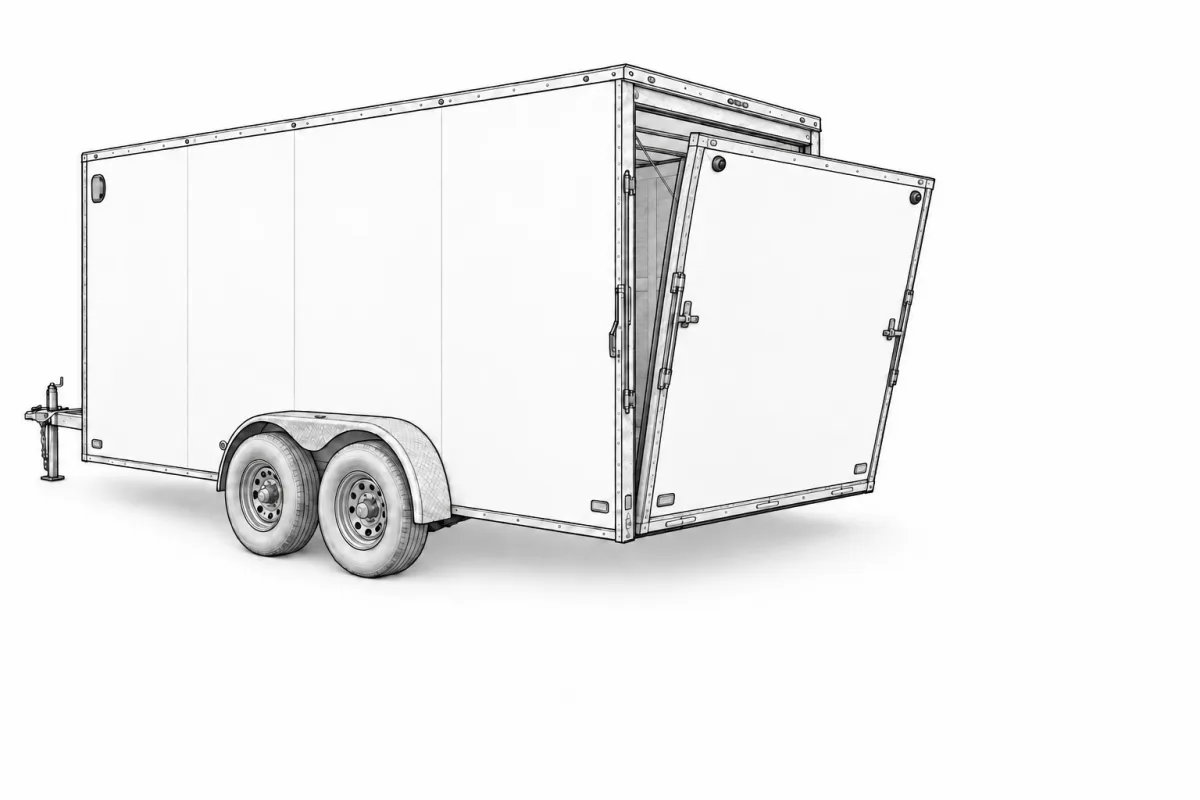
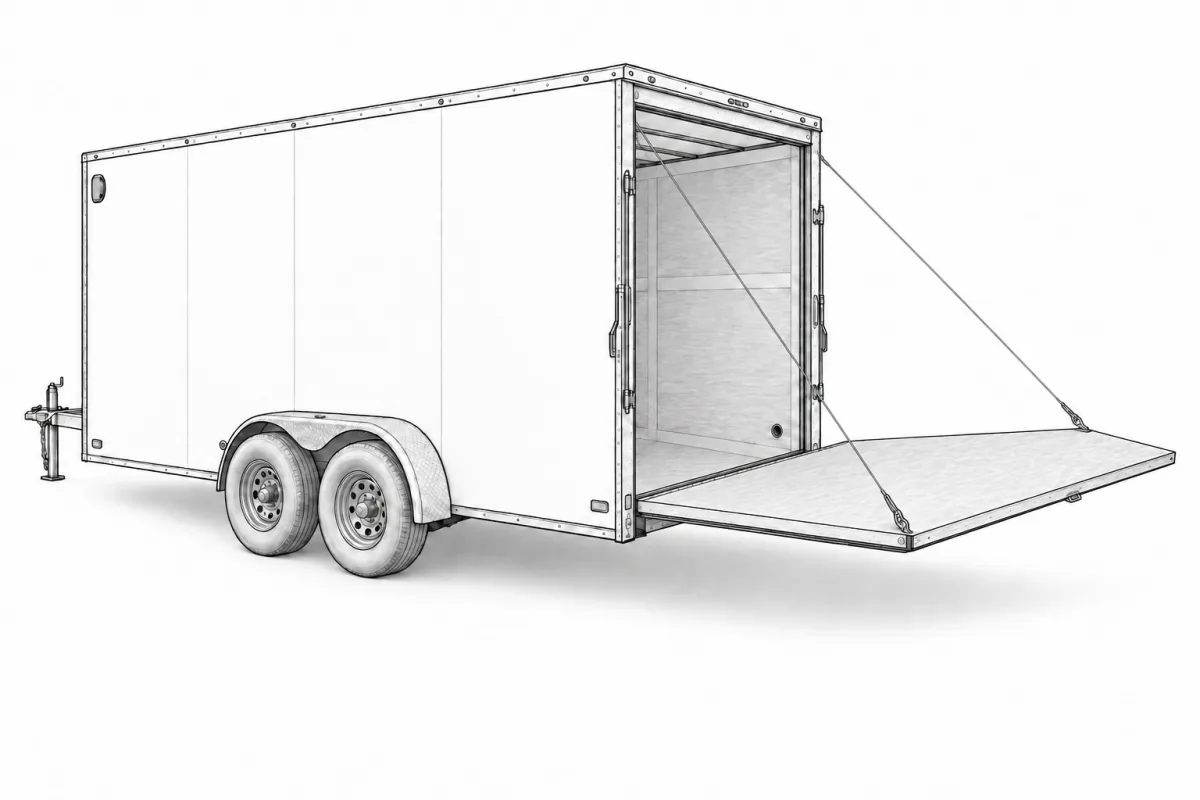
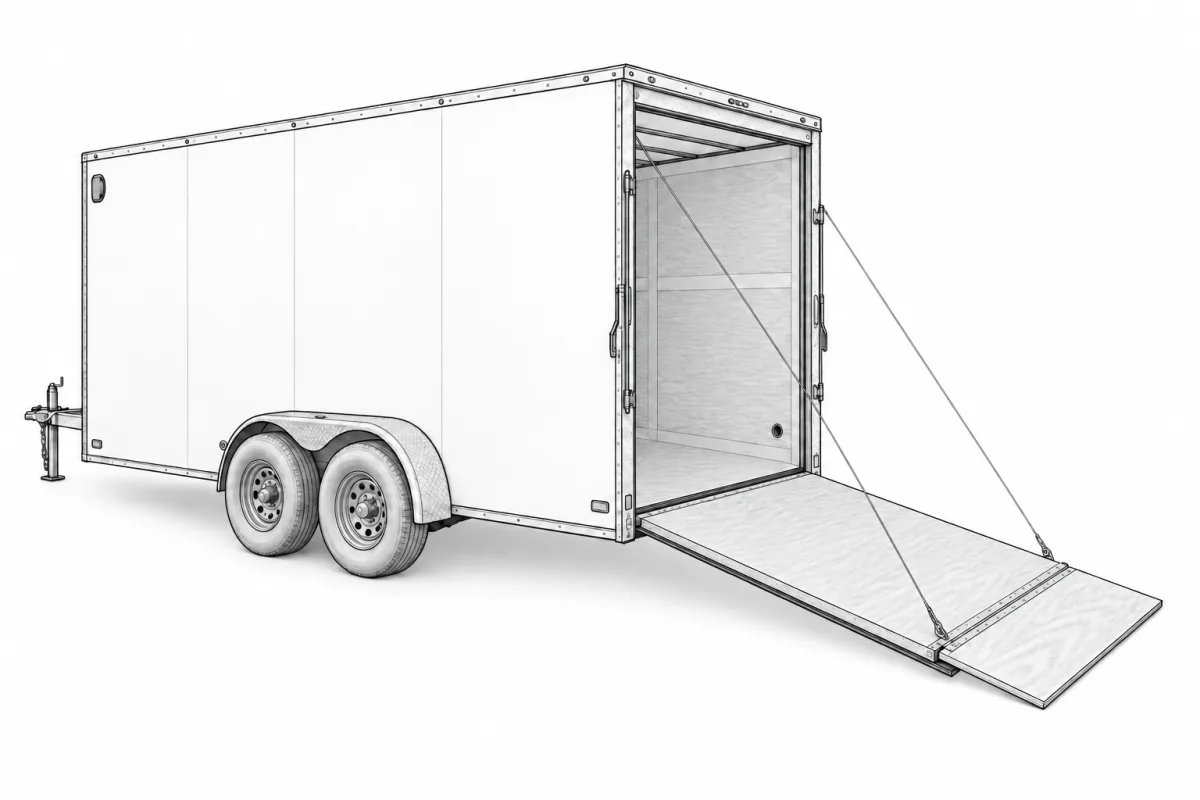
The interior is the product
Tap through the working zones.
This tour uses photographs of the real prototype. Each view shows how one fixed product supports different parts of a builder's day.
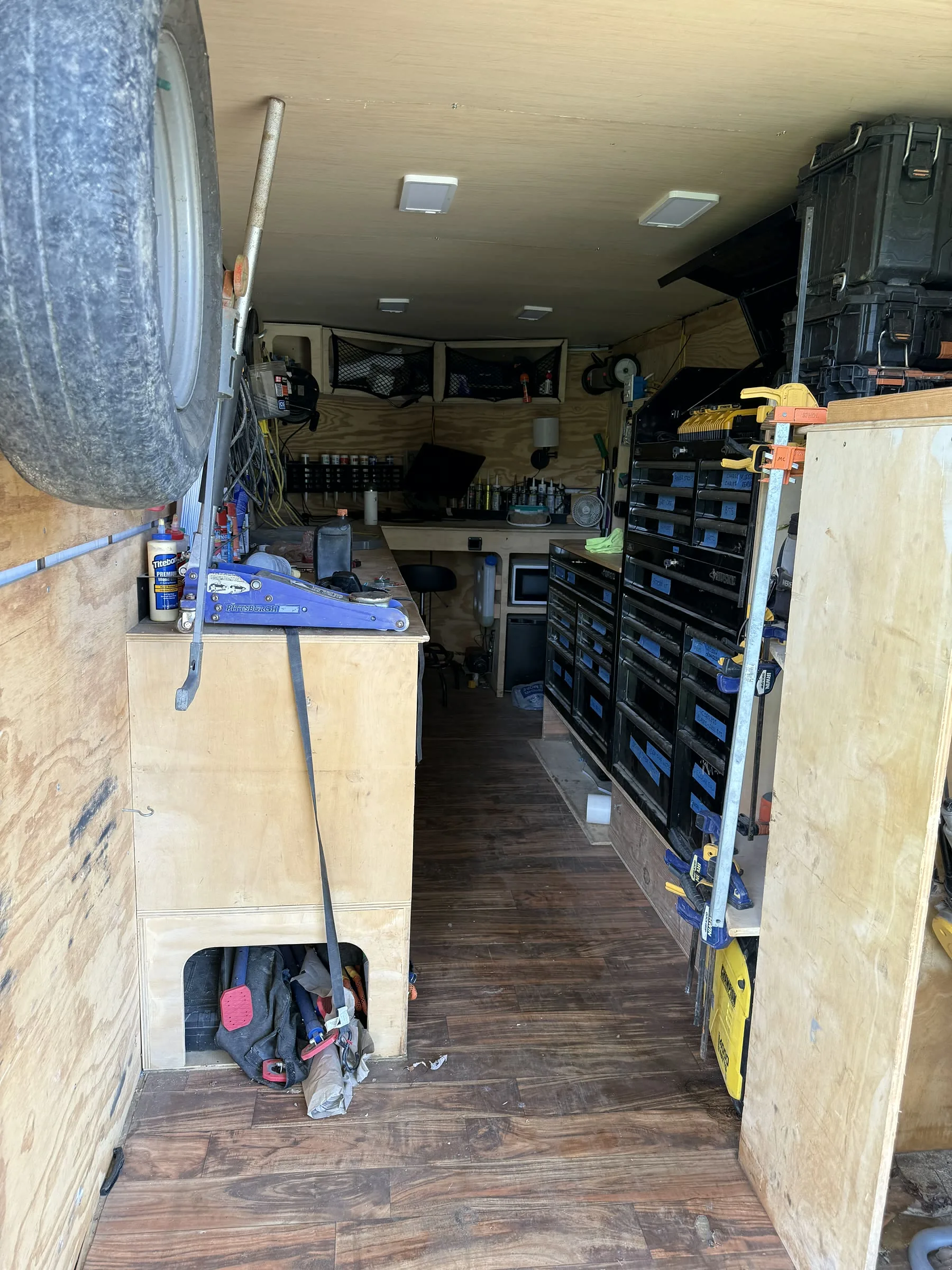 ZONE 01
Tap a zone to tour the same 7×16 product
Clear operating aisle
A usable path through the trailer keeps the shop accessible instead of turning the floor into overflow.
How the system comes together
Built as one complete mobile shop.
Purpose-built plywood and shop drawers move into a fixed interior plan, seat against the trailer structure and lock into the operating layout. The sequence explains assembly logic; it is not measured production CAD.
- Standardized 7×16 V-nose shell
- Repeatable storage modules
- Travel retention and clear aisle
- Shop-built precision that can be repaired
Recognize your work
Different crews. The same Biltout.
Residential builder: Keep daily tools, layout gear, fasteners, chargers, saws and plan work in known zones across changing jobsites.
Examples change. The standardized complete 7×16 product does not.03
Prototype proof
Real materials. Real use.
Purpose-built plywood earns its place.
It is durable, repairable and made with shop-built precision. Metal drawers and modular cases join it where they make operational sense. The product is premium because the system is considered—not because the material pretends to be something else.
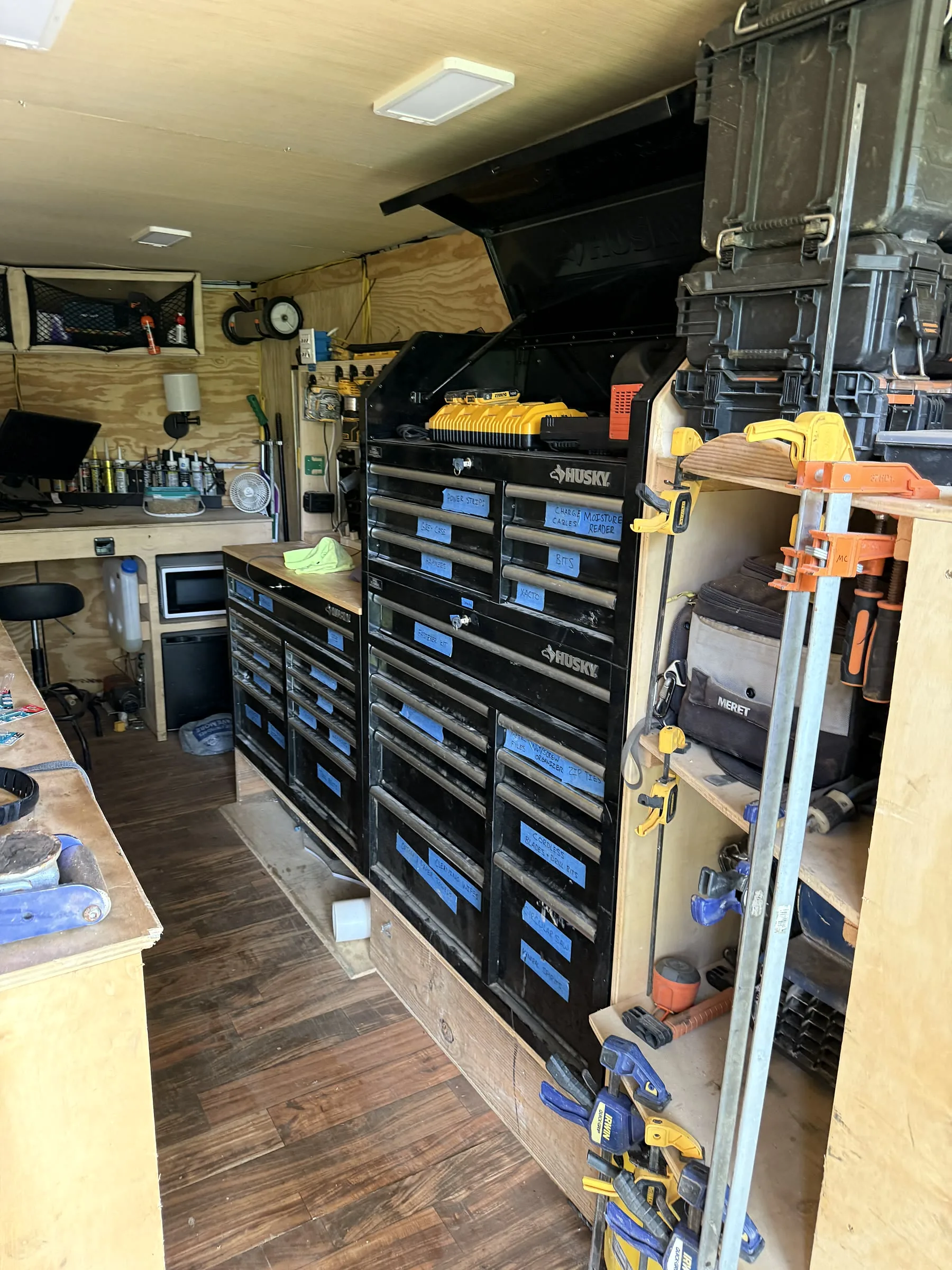
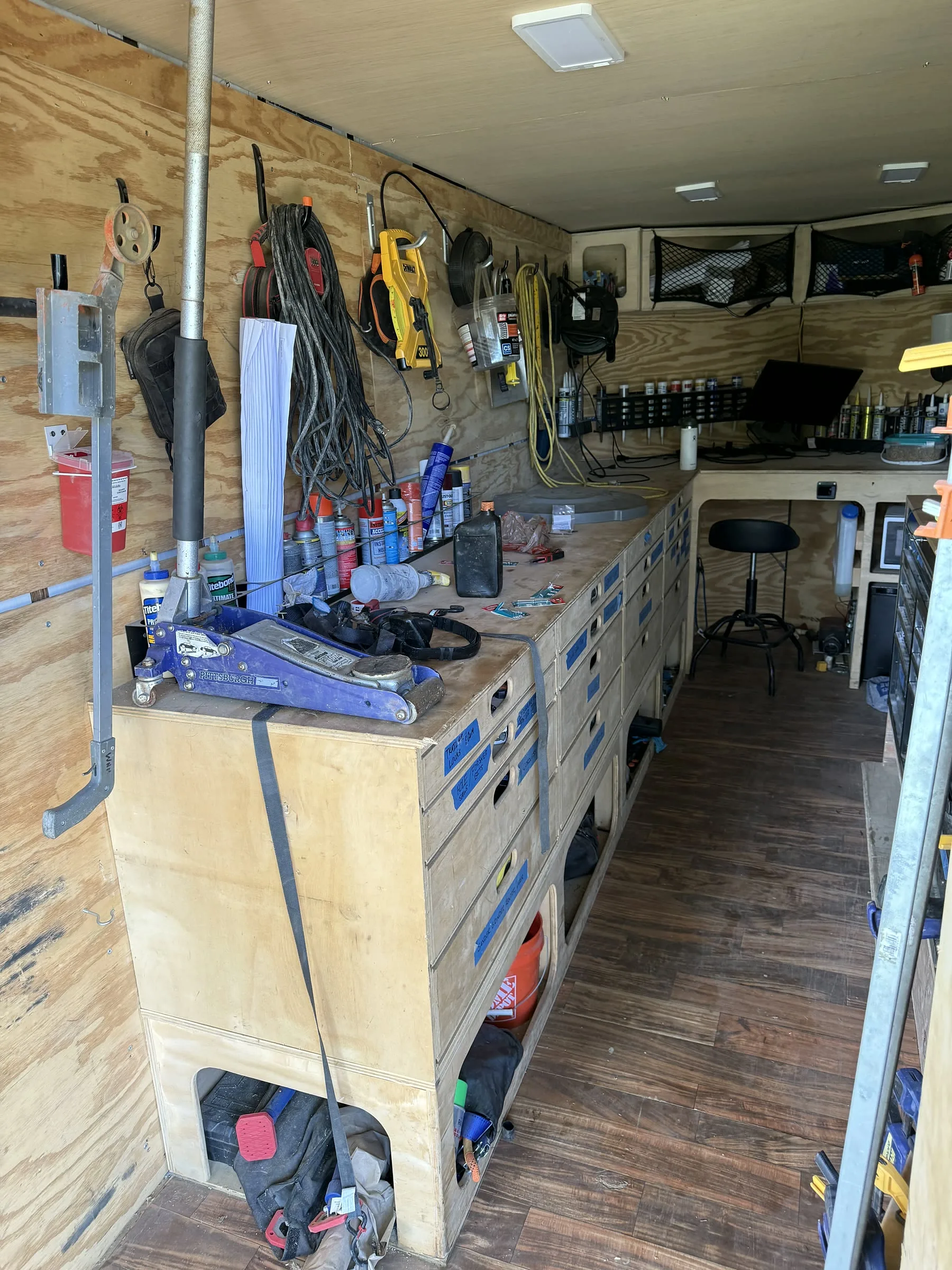
Field view
Walk the aisle before you read the promise.
The footage shows the operating prototype behind the product direction. It proves the workflow concept, not a frozen production specification.
Apply for a complete tourDefinitively one product
The complete 7×16 Biltout.
The physical product stays the same across trades and use cases. Biltout is turning the working prototype into a repeatable production system, with final component, weight and capacity documentation completed before a binding order.
Permanent zones
Daily tools, drawers, charging, long items, ladders, saws and plan work each have a defined home.
Shop-built system
Purpose-built plywood, metal storage and retention details form one integrated interior.
Exact offer first
Price stays private until the production specification, real costs, finished weight and written terms are complete.
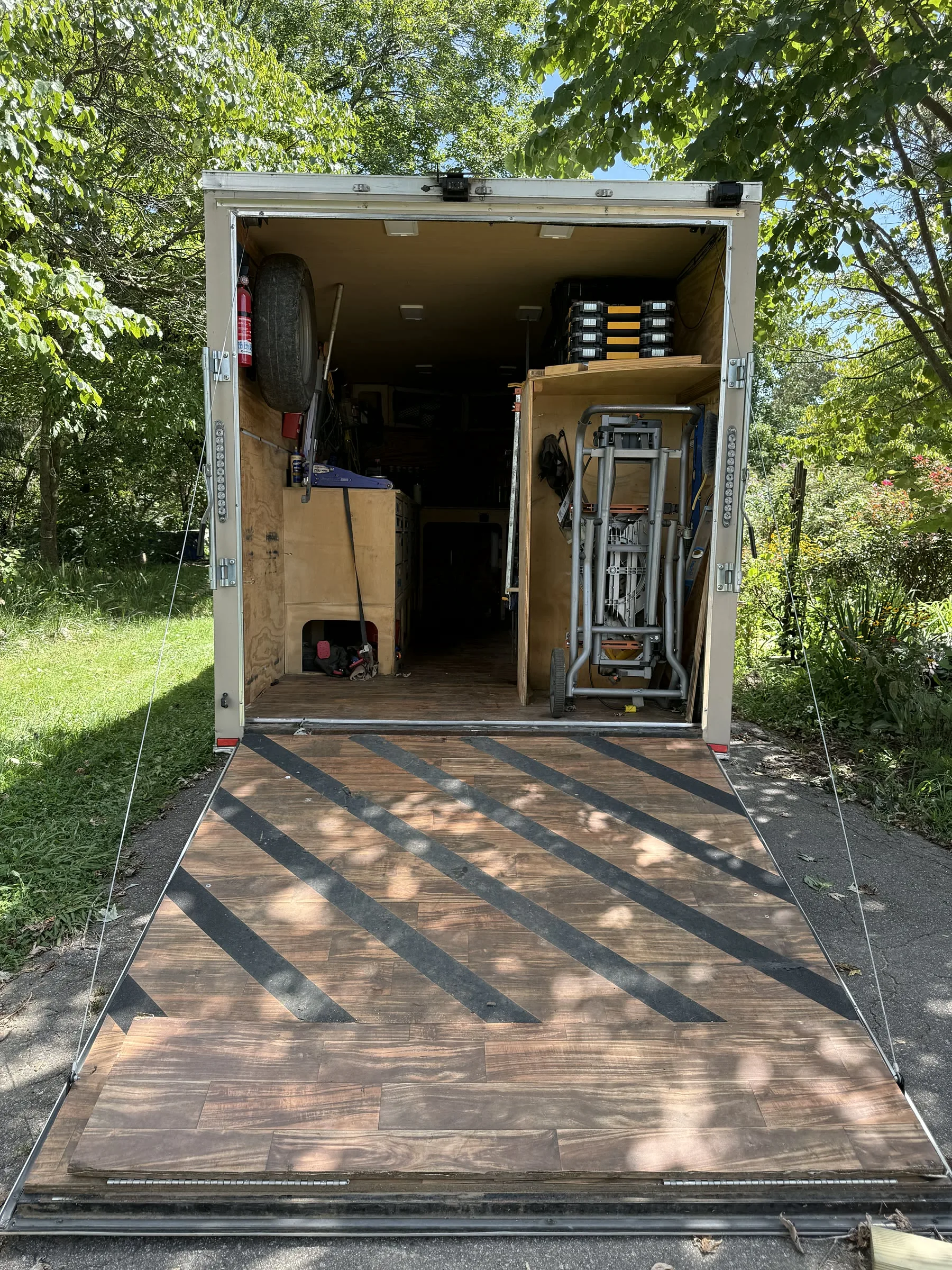 THE ORIGINAL WORKING PROTOTYPE
Built by builders
We needed it before we named it.
Who Needs Normal Homes needed a better way to move a residential construction operation from job to job. Scott, Mike and their dad built a trailer around the way their crew actually worked.
The next discipline is turning that real operating lesson into one repeatable product—without polishing away the honest material or claiming decisions before they are proven.
04
The path forward
Tour before offer
See the system. Then establish fit.
- 01
Tour the Biltout
Walk the field-used prototype in Candler or start with a direct video tour.
- 02
Map the friction
Show us where searching, forgotten tools, supply trips and repeated setup consume your crew.
- 03
Review the complete product
See the standardized 7×16 product, written inclusions and qualification boundaries together.
- 04
Apply for a Founding Build Slot
A fit conversation comes before an exact written offer. The application creates no commitment.
05
Objections, answered
Before you apply
Plain answers. No sales fog.
Are the tools shown part of the product?+
No. They belong to the working prototype and demonstrate the kind of real operating load that shaped the storage system.
Is there more than one Biltout?+
No. Biltout is one standardized complete 7×16 product. Trade examples help you recognize the workflow; they do not change the physical product.
Is the photographed trailer the production unit?+
No. It is the field-used working prototype. Production details remain subject to final component, weight, capacity and documentation work.
What does it cost?+
There is no public price yet. Internal planning numbers are not quotes. A qualified applicant receives the exact written product and price only after production costing is complete.
What can tow it?+
Final finished and tongue weight must be documented before a binding order. Vehicle, hitch, payload, tongue allowance and brake controller all require review.
Founding Build Slot application
Tour the Biltout. Show us where your operation gets stuck.
This application starts a fit conversation around one complete 7×16 Biltout. It is not a reservation, order or promise.
No checkoutOne standardized productExact written offer first
The production specification, finished weight, capacity, price and customer terms must be completed before a binding order.